
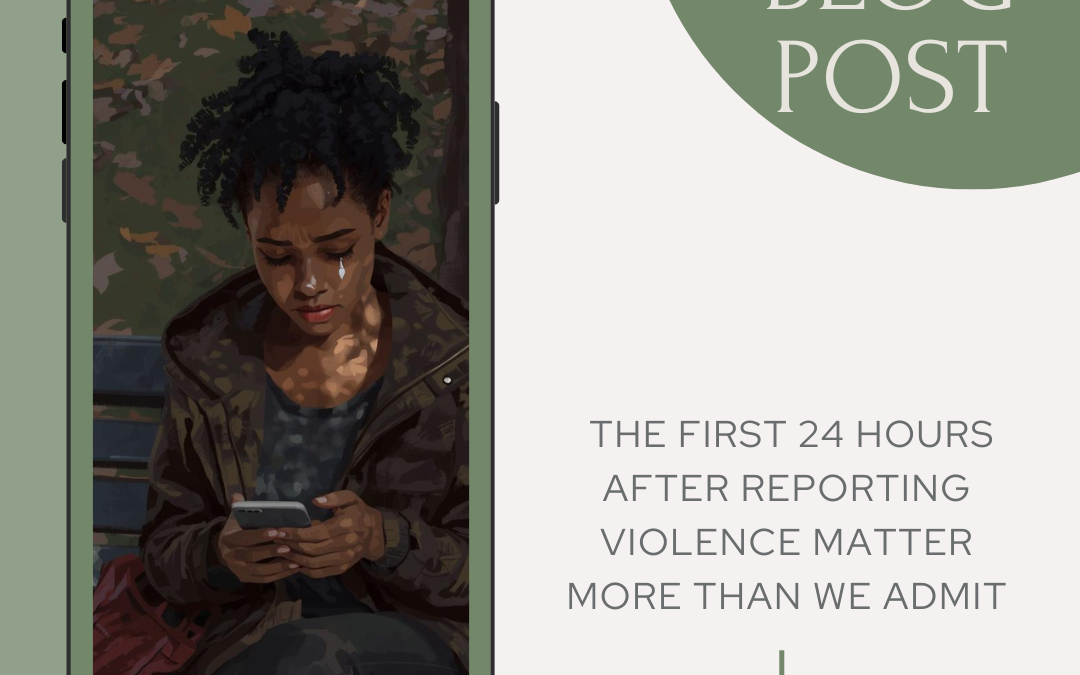
The moment a survivor reports violence, something fragile happens. Trust is placed in a system. Hope is placed in people. Fear sits quietly in the room. The first 24 hours decide whether that trust grows or collapses.
For many survivors, reporting is not about punishment or prosecution. It is about safety. It is about being believed. It is about finding out whether help is real or only promised.
In those first hours, the tone matters. A survivor needs to be received with calm and respect. Not suspicion. Not blame. Not rushed questions. Listening is not a courtesy. It is the foundation of care.
Safety comes next. This includes physical safety, emotional safety, and digital safety. Risk must be assessed early. Not later. Not after paperwork. A survivor should know that their wellbeing is the priority, not the process.
Medical and psychosocial care should be offered clearly and without pressure. Nothing should happen without consent. Every step should be explained in language that makes sense. Care is not complete if it leaves a survivor confused or afraid.
Evidence handling also begins in these early hours. When done properly, it protects both the survivor and the case. When done poorly, it causes harm. Survivors should understand why evidence matters and what will happen to it. Silence creates fear. Clarity builds confidence.
Perhaps most importantly, the first 24 hours should not end in disappearance. Survivors need to know what comes next. Who to call. What to expect. When they will hear back. Support that stops abruptly is not support.
Reporting violence is not easy. Systems exist to make it easier, not harder. When the first 24 hours are handled with care, dignity, and accountability, survivors are reminded of something powerful.
They are not alone.