

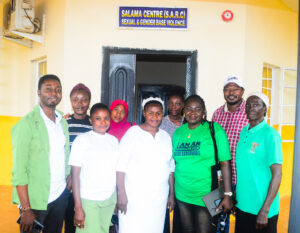
When sexual and gender-based violence happens, survivors often struggle to find help. In Kaduna State, the Sexual Assault Referral Centre (SARC) provides a safe space where survivors receive medical care, counseling, legal support, and dignity. We sat down with Grace Yohanna Abbin, Pilot Manager of Kaduna SARC, to learn about their work, impact, and challenges.
Q: Can you introduce yourself and your role at the Kaduna SARC?
Grace Yohanna Abbin: My name is Grace Yohanna Abbin. I have been working as the Pilot Manager of the Sexual Assault Referral Centre since its inception in 2019 — that’s over six years now.
Q: What services does the Centre provide to survivors?
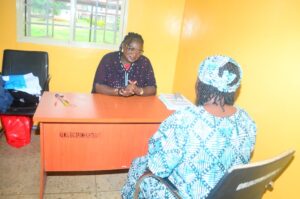
We provide comprehensive services, including medical support, psychosocial counseling, optional legal intervention, and resettlement support. We also facilitate access to justice by working with law enforcement and the judiciary.
Q: What does a typical day at the SARC look like?
A typical day starts with receiving survivors, giving immediate support, and linking them with the right services. We provide medical examinations, counseling sessions, and follow-up visits. Our goal is to make sure survivors do not walk this journey alone.
Q: What kind of cases do you handle most often?
We handle physical, emotional, economic, and financial abuse, as well as human trafficking. Since inception, we’ve handled 4,884 cases, including 545 cases of rape and defilement. In 2025 alone, we’ve treated 558 reported cases of GBV.
Q: How does the SARC collaborate with other institutions?
We work closely with the police, judiciary, health services, traditional leaders, and religious leaders. This synergy ensures survivors get medical exams, police or NSCDC reports, and court proceedings when needed. Our referral pathways are robust and survivor-centered.
Q: Can you share an example of the Centre’s impact?
I recall a survivor who came to us after reporting to the police. We provided medical attention, counseling, and resettlement support. The case went to court, justice was served, and today that survivor has rebuilt their life. Stories like this remind us why SARCs are so important.
Q: What are the main challenges you face?
Funding is our biggest challenge, followed by staffing and access to drugs. Coordination with other institutions can also be difficult due to delays or conflicts of interest. These gaps limit how effectively we can serve survivors.
Q: What message do you have for government officials and donors?
We urge them to prioritize funding and support for SARCs. Survivors deserve dignity, safety, and justice, and SARCs are central to making that possible. Additional funding and resources will make us more effective.
Q: And what should survivors and the general public know about Kaduna SARC?
Our services are free, confidential, and survivor-centered. Anyone can walk in and receive help without fear. We encourage survivors to reach out, knowing they will be supported every step of the way.
Q: How has RoLAC supported your work?
RoLAC has been instrumental, especially through capacity building and provision of consumables. They also support our Skills Acquisition Centre, where survivors learn trades that help rebuild their lives. Kaduna now has four SARCs, which is a major step forward.
Closing:
From handling thousands of cases to securing life imprisonment convictions, the Kaduna SARC is proof that with the right support, survivors can find justice and healing. But as Abbin reminds us, the work is far from done. Survivors need more — and stronger institutions must rise to meet that need.